
 Wildlife
of Singapore
Eurasian Skylark
Alaudidae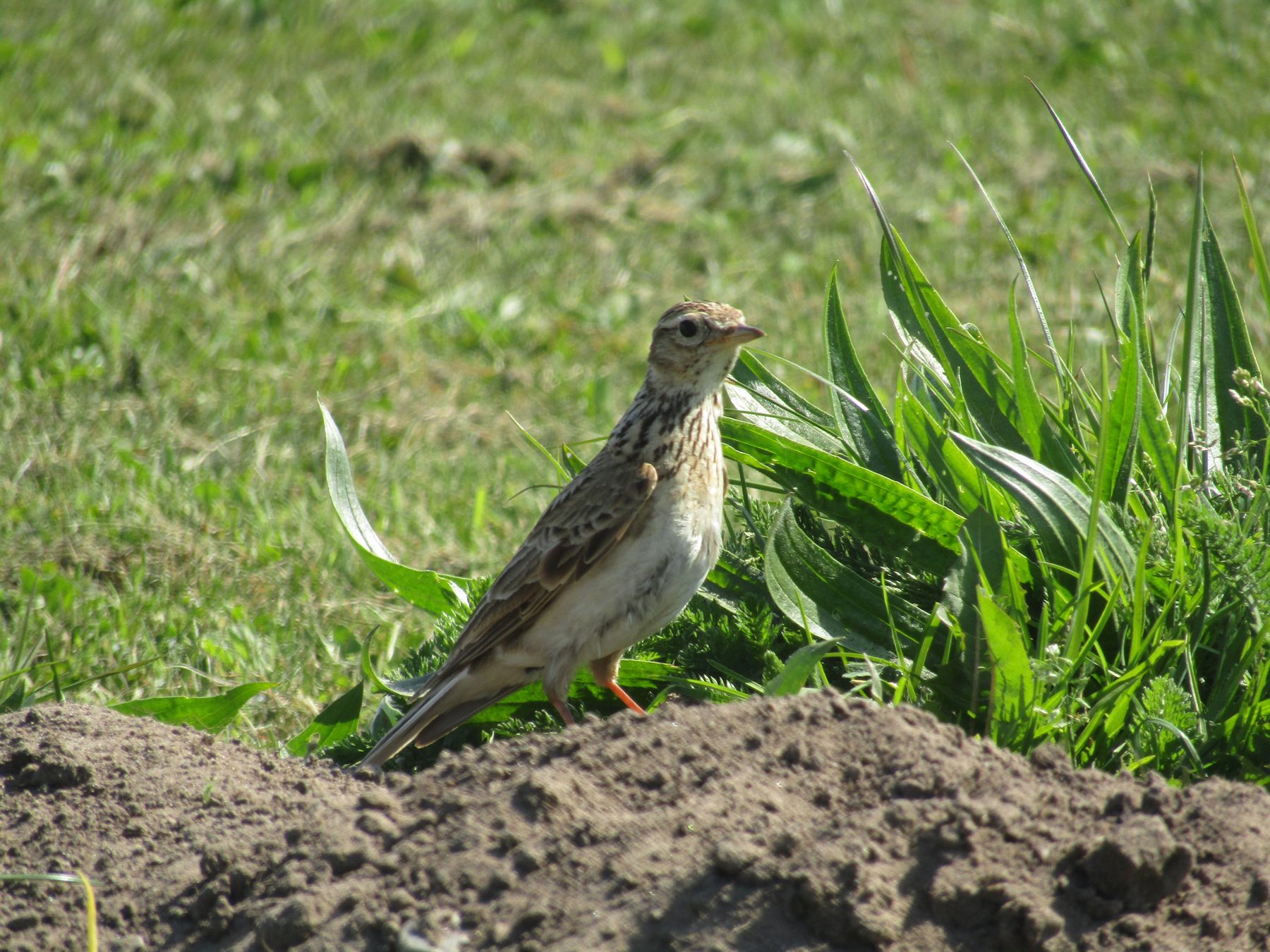
Photo: Kolforn · CC BY-SA 4.0 (May be cropped or resized)
Alauda arvensis
Basic stats
Diet
Plants and seeds
Habitat
Open farmland and heath; open nest in a shallow depression on open ground
Range
Europe and the Palearctic; introduced in Australia, New Zealand, Canada and Hawaii
Clutch size
3–5 eggs
Incubation period
About 11 days
Size
18–19cm
The Eurasian skylark, commonly called simply the lark in Europe, is 18–19 cm long, streaked greyish-brown above and on the breast with a buff-white belly, and like most larks a rather dull-looking bird. It has a short blunt crest that can be raised and lowered, and in flight shows a short tail and short, broad wings (Wikipedia, general species account).
It is a bird of open farmland and heath, known for the male's song, delivered in hovering flight from heights of 50 to 100 m. The female builds an open nest in a shallow depression on open ground, lays three to five eggs and incubates them for around 11 days; the chicks leave the nest after eight to ten days, well before they can fly, and are independent after around 25 days. Nests suffer high predation (Wikipedia, general species account).
Quick answers
- What does the Eurasian Skylark eat?
- Plants and seeds
- What habitat does the Eurasian Skylark live in?
- Open farmland and heath; open nest in a shallow depression on open ground
- Where is the Eurasian Skylark found?
- Europe and the Palearctic; introduced in Australia, New Zealand, Canada and Hawaii
- How many eggs does the Eurasian Skylark lay?
- 3–5 eggs
- How long are the eggs of the Eurasian Skylark incubated?
- About 11 days
- How big is the Eurasian Skylark?
- 18–19cm